
Safety First: Best Practices for Employee Transportation Services
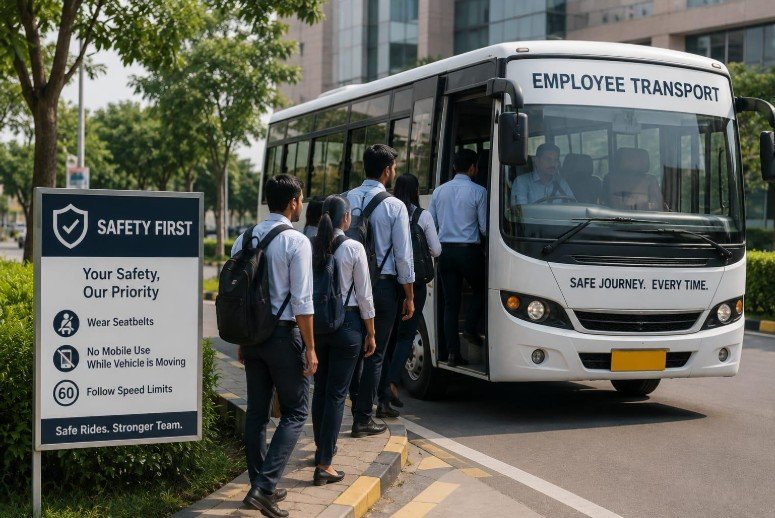
Employee transportation assistance has slowly turned into something much bigger than a backend support task. Earlier, companies mostly looked at transport as movement. Employees get picked up. Employees reach office. Done. As long as vehicles showed up on time most days, nobody questioned the system too much.
That thinking feels outdated now. Slightly careless too, if we’re being honest.
Today the commute shapes how employees experience the organization itself. Not in some abstract HR language kind of way. In practical, everyday ways. If transport feels unreliable, communication breaks down, or safety protocols seem loose, employees notice. Quietly at first. Then very clearly.
For large organizations especially, Employee Transport Safety has moved beyond admin coordination. Leadership teams discuss it now because transport failures ripple outward fast. Productivity gets affected. Employee confidence dips. Escalations pile up. One bad incident can suddenly expose ten operational gaps nobody paid attention to earlier.
And transport operations are messy by nature. People sometimes underestimate that part.
Traffic shifts unpredictably. Employees change locations. Hybrid work completely disrupted old commute patterns. Vendors vary wildly in quality. Even weather changes route behavior in certain cities. A transport helpdesk that looked perfectly efficient on paper six months ago may already be outdated without anybody formally acknowledging it yet.
That happens more often than companies admit.
Why Safety Feels Different Now?
The conversation around workplace safety has changed over the years. Earlier it mostly meant office security. Access cards. CCTV systems. Building infrastructure. The commute sat outside that discussion somehow.
Not anymore.
Employees now expect visibility while travelling, especially in companies running rotational shifts, late-night operations, or multi-city transport systems. Families expect it too sometimes. There’s a psychological layer here organizations rarely talk about openly, but it exists.
People want to feel reachable, trackable and supported if something goes wrong by employee transportation assistance.
According to NITI Aayog, India records nearly 1.5 lakh road fatalities every year, which changes the context around employee transportation entirely. It stops being “just operations” after a point.
Now safety expectations include verified drivers, route visibility, escalation support, emergency response systems, live updates. Not because employees are demanding luxuries. Because uncertainty during travel creates stress people carry into the workday itself.
Small things matter more than companies realize. One unanswered call during a delay. One unverified driver. One route nobody reviewed properly.
Confidence erodes quietly.
Real-Time Visibility Changes Behavior
Employees feel calmer when they know what’s happening during their commute. Sounds obvious. But many transport systems still operate with surprisingly little visibility.
People can tolerate delays. Most people understand traffic exists. What frustrates them is silence.
That uncertainty builds tension faster than the actual delay itself sometimes.
Real-time tracking has therefore become central to Employee Transport Safety frameworks. Employees expect to check vehicle locations, estimated arrival times, and route progress without repeatedly calling support teams that may or may not respond immediately.
According to MarketsandMarkets, the global fleet management market is projected to reach USD 52.4 billion by 2027, largely driven by operational visibility and safety technologies.
Still, technology alone solves very little. That part gets overstated constantly.
A polished dashboard sitting on top of weak operational discipline creates the appearance of control, not actual control. Good transport systems use technology to support execution. They don’t rely on software to compensate for unclear ownership or inconsistent processes.
There’s a difference. A very noticeable one once operations scale.
Why a Professional Transport Helpdesk Matters?
Transport operations don’t run perfectly every day. Delays happen. Drivers call in sick. Vehicles break down unexpectedly. Employees miss pickups. Sometimes routes fail because one earlier delay disrupts everything downstream for the next few hours.
Without a proper transport helpdesk, small issues spread quickly across teams.
Employees need clarity around where problems should be reported. Escalations need ownership. Support teams need live visibility into schedules and routes before responding to frustrated employees already waiting outside pickup points.
Otherwise, confusion multiplies unnecessarily.
A structured transport helpdesk also signals something important psychologically. It tells employees somebody is actively managing the situation instead of letting operations drift unchecked in the background.
That reassurance matters. Even when nobody formally measures it.
Driver Behavior Shapes Safety More Than Policy Documents
Policies matter, obviously. But daily transport safety depends far more on driver behavior than organizations sometimes want to admit.
Many transport incidents happen because of speeding, fatigue, distraction, poor judgement, or inconsistent driving habits developed over time. Written policies alone don’t correct those behaviors.
Best employee transportation safety practices invest continuously in driver engagement. Training matters. Fatigue monitoring matters. Behavioral reviews matter. Route familiarization matters too because unfamiliar routes increase operational risk in subtle ways.
According to the Ministry of Road Transport and Highways, over-speeding contributed to nearly 72 percent of road accident deaths in India in recent reporting periods. That statistic makes the larger point pretty difficult to ignore.
Safety culture isn’t built through quarterly reminder emails nobody fully reads. It develops slowly through repetition, accountability, monitoring, and everyday operational discipline. Boring things mostly. But important boring things.
Route Planning Is Also About Risk
Best employee transportation safety practices like route planning gets discussed like an efficiency exercise most of the time. Fuel optimization. Reduced travel time. Better utilization.
But route planning is also deeply connected to safety.
Experienced transport helpdesk teams evaluate routes from multiple angles simultaneously. Travel duration matters. Cost matters too. But employee comfort and safety perception matter just as much because commute experience is emotional in ways spreadsheets cannot fully capture.
Some cost-saving decisions look excellent on paper. Then fail completely in practice once actual employee behavior enters the picture.
Metro cities make this harder. Traffic patterns shift constantly. Static route structures rarely remain efficient for long. Which means transport systems require continuous adjustment, not one annual optimization exercise followed by silence for the next twelve months.
Building Safety into Everyday Operations
The strongest transport systems usually feel uneventful. That’s generally a good sign.
Employees board vehicles without thinking too much about the process. Routes operate predictably. Escalations get resolved before turning into operational crises. Things just work quietly in the background.
That consistency comes from operational maturity more than flashy technology.
Safe transport systems and transport helpdesk are rarely built through one major decision. Usually, it’s smaller operational decisions repeated consistently over time. Unremarkable decisions, honestly. But together they shape whether employees trust the system when it actually matters.
At ConsultTrans, employee mobility is treated with the seriousness it deserves. Through stronger safety practices, defensive driving awareness, operational insights and smarter fleet management approaches, enterprises can create safer daily commute experiences for employees while improving control across transport operations. Connect with us for practical insights, industry trends and real-world best practices shaping the future of managed mobility and fleet safety in India.